


Table of Contents
Quick Takeaways: What New Amsterdam Apparel achieved
- A single source of truth for stock, orders, and inventory across four brands
- Faster onboarding of new partners without adding operational complexity
- Fewer manual checks, with exceptions flagged earlier and handled proactively
- More consistent fulfilment performance across markets and peak periods
- A repeatable operating model that supports continued international growt
Very few fashion distributors manage to roll out multiple premium brands internationally without increasing operational complexity. New Amsterdam Apparel is one of them.
As a licensee and distributor of men’s fashion and close-to-body fashion, the company represents premium and luxury brands in more than 20 countries. Four of these brands have now been working for over five years with the combined setup of Itsperfect as an ERP system and Modexpress as a logistics partner. Annually, approximately 2,000 B2B orders are processed and more than 300,000 items are shipped.
International expansion requires more than just commercial strength. Without real-time insight and integrated processes, fragmentation quickly sets in. As New Amsterdam Apparel’s international growth accelerated, it became clear that the operational foundation also needed to scale up.
Achieving manageable growth
Growth is hard to manage when systems are fragmented, especially if you’re adding brands or entering new markets. The route to success lies in unifying your systems to reduce, or even eliminate, inconsistency and manual effort.
New Amsterdam Apparel faced this challenge as they expanded their distribution of luxury men’s fashion across 20 countries. Over the past five years, they moved four premium brands onto a unified setup: Itsperfect fashion ERP and Modexpress logistics, supporting 2,000+ B2B orders and shipping 300,000+ pieces per year.
In this case study, we’ll take a look at which operational issues emerged during scale-up and how we helped them get a single unified view across their operations.
Too many systems, too little clarity
As New Amsterdam Apparel added more channels, partners and locations, gaps started to appear. Handoffs became slower and more complex, with teams spending hours reconciling numbers and running manual checks just to keep systems aligned.
Getting a true picture of stock, orders and exceptions was even more labour-intensive during busy periods. They plugged some gaps with workarounds, but firefighting was common when things didn’t add up. This made it harder to consistently deliver the high standards customers expected.
One operating model, everywhere
New Amsterdam Apparel knew they couldn’t keep adding more disconnected tools and workarounds. They needed one place to manage core data and fulfil orders consistently across the board, without losing control as complexity increased.
Itsperfect served as the ERP foundation, managing product data, orders and inventory rules centrally, with automation to accelerate workflows and a modular setup that could roll out across multiple brands.
Modexpress became the trusted logistics partner for fulfilment, distribution, returns and value-added services. A governable flow enabled clear handoffs and early flagging of exceptions. This gave teams more visibility and control, leading to fewer manual checks and less crisis management.
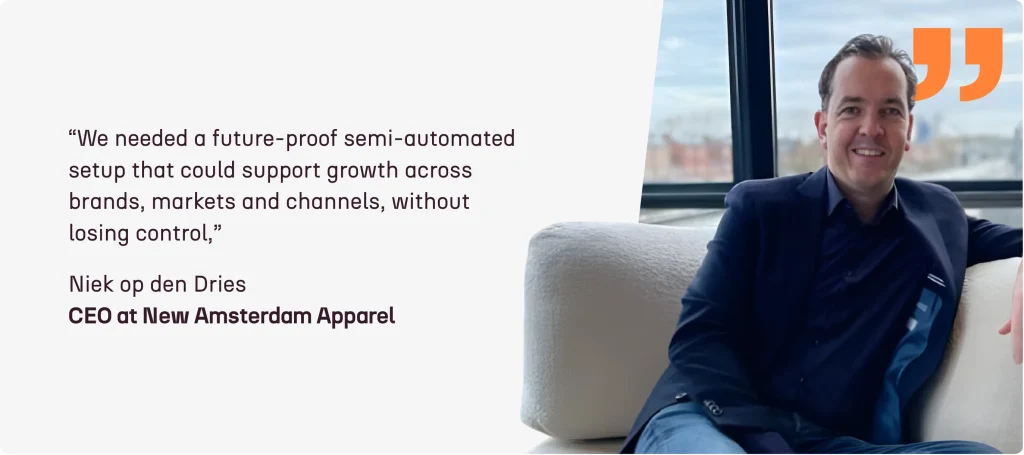
“The collaboration gives us both control and flexibility. We can move faster and onboard partners more easily, without adding operational complexity.”
— Niek op den Dries, CEO at New Amsterdam Apparel
Full visibility of data
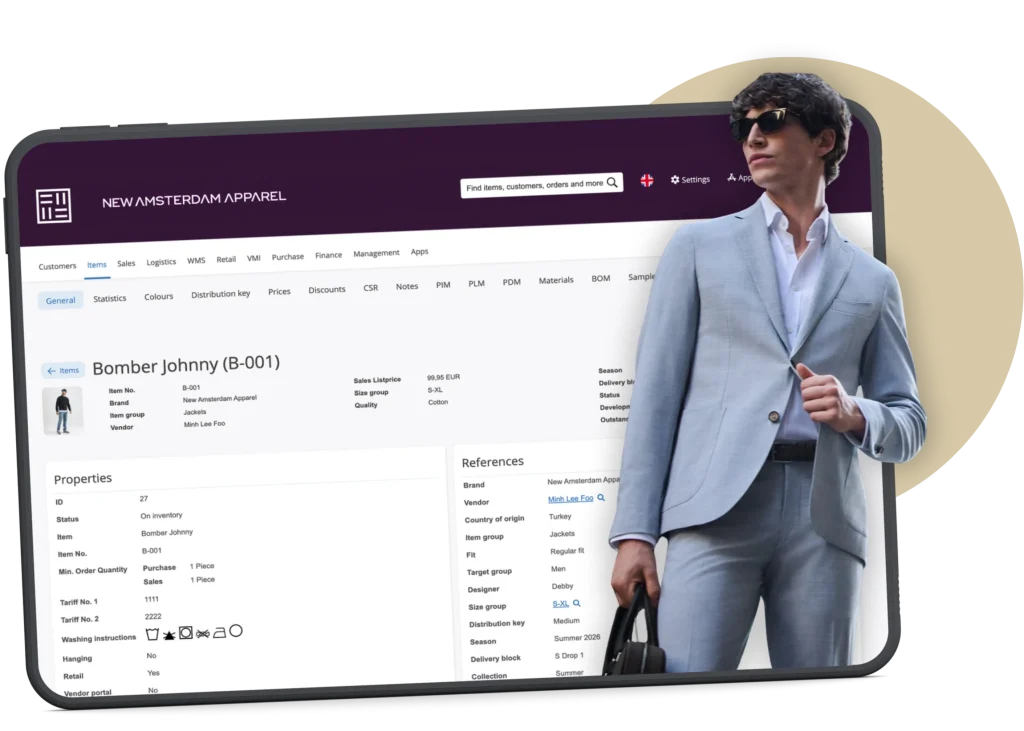
Instead of reconciling data across multiple systems, teams now use Itsperfect for day-to-day ordering and inventory tasks. As a single source of truth, it makes it easier to spot issues before they escalate. Automated workflows handle routine steps, while exceptions are flagged early for proactive control.
Due to its modular setup, New Amsterdam Apparel only embedded the components that would really move the needle for them, including B2B order management, invoicing, and integrations to connect e-commerce, accounting and logistics flows.
The result is a repeatable implementation approach with clear data ownership and a structure that makes onboarding faster.
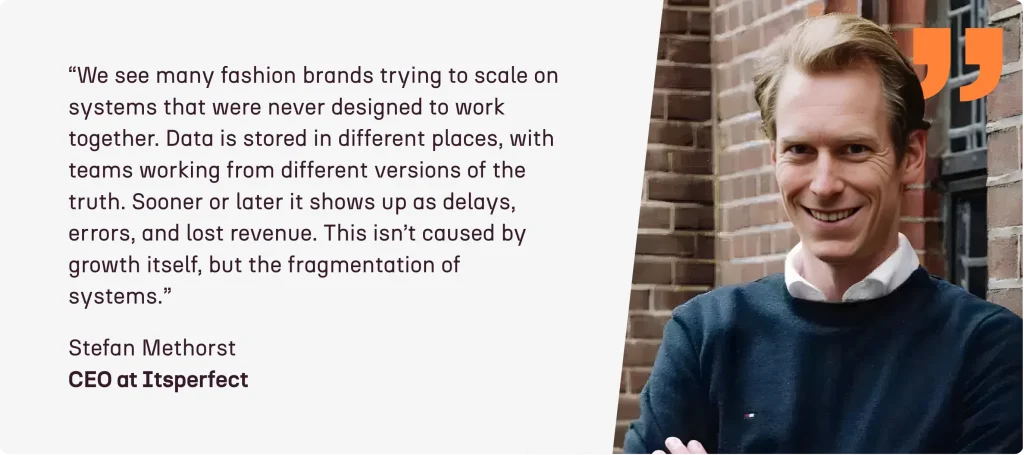
As Stefan Methorst, CEO at Itsperfect, notes, many brands run into issues when systems don’t evolve with them: “Data is stored in different places, with teams working from different versions of the truth. Sooner or later it shows up as delays, errors, and lost revenue.”
Clearly prioritised, fast-response logistics
As New Amsterdam Apparel’s network expanded, they needed consistent execution. This meant handling different order profiles reliably and keeping returns moving so stock could re-enter inventory quickly.
The fulfilment model is flexible enough to adapt to different partner needs and handle a mix of order sizes. Modexpress supported garments-on-hanger (GOH) flows alongside flat-packed handling, helping maintain product condition while keeping items moving quickly.
Working from the same shared view of stock and order status, fulfilment became easier to manage day to day. Clear handoffs and early flagging of exceptions supported reliable delivery performance, with operational discipline around priorities and cut-off times.
As volumes spiked, the operation could scale during peak periods while maintaining consistent service levels across markets.
“When order and inventory data is consistent across all channels, brands can handle much more volume with far fewer errors.”
— Jan van Vlokhoven, CIO at Modexpress

The impact on day-to-day operations
With unified fashion ERP software and fulfilment in place, New Amsterdam Apparel moved from fragmented, manual processes to a stable, scalable system that’s easy to extend as new partners and channels are added.
- A repeatable operational model, ready to support further expansion without slowing operations down.
- One consistent view of stock and orders across four brands, reducing discrepancies.
- Faster onboarding of new retail and distribution partners, even under complex arrangements.
- More control and quicker response to customer needs, with exceptions easier to spot and act upon.
- A more reliable ERP-to-logistics data flow, reducing manual checks and avoidable errors.
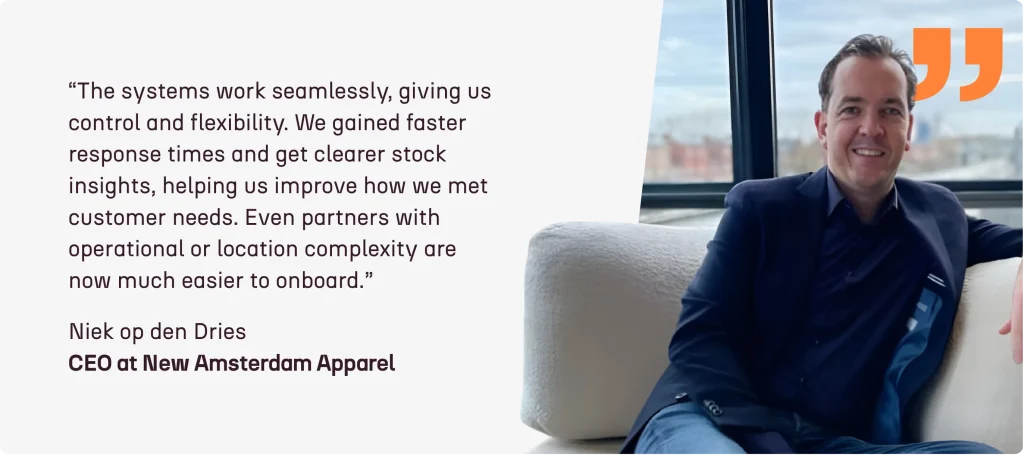
This shift is already visible in how teams operate day to day. As Niek op den Dries explains, “the systems work seamlessly, giving us control and flexibility. We gained faster response times and clearer stock insights, helping us improve how we meet customer needs.”
Scaling up the smarter way
By combining Itsperfect as their central ERP with Modexpress managing fulfilment, distribution, and returns, New Amsterdam Apparel created a coordinated operating model that gives teams a single, reliable view of product data, orders, and inventory as their network continues to expand.
With Itsperfect providing the control layer for product data, order management, and inventory rules, they gained clearer day-to-day visibility and a structure that can scale alongside new brands, partners, and markets.
If you’re trying to scale while keeping control of your data and logistics, talk to us about your current setup and we’ll show you how we can unify your systems.
Want the logistics angle? Read the case from the Modexpress perspective HERE.
WANT TO EXPERIENCE ITSPERFECT FOR YOURSELF?
Request an online demo today!