



Table of Contents
Quick Takeaways
- The Digital Product Passport is expected to become mandatory for most fashion items sold in the EU around 2028.
- The ESPR expands sustainability requirements to nearly all physical products, including apparel.
- Fashion brands will need reliable data on materials, traceability, environmental impact, and end-of-life guidance.
- Early investment in digital infrastructure and integrated systems will reduce compliance risk and create long-term operational advantages.
If the concept of the Digital Product Passport (DPP) is still raising question marks, you’re not alone. For many fashion brands, it still feels more like a regulatory concept circulating in policy updates rather than a day-to-day business priority.
Uncertainty around timing, required data, and implementation has left many teams asking the same questions: When does this really apply to us? What exactly will we need to deliver? And where do we even start?
Under the EU’s Ecodesign for Sustainable Products Regulation (ESPR), Digital Product Passports are expected to become mandatory for textiles in 2028. For brands selling in the European Union, sustainability and transparency are set to become mandatory parts of the fashion business.
This guide explains what the DPP is and who it applies to. It covers the data fashion brands will be expected to provide and what preparation looks like in practice ahead of the 2028 deadline.
Let’s break it down.
What is the ESPR regulation?
The Ecodesign for Sustainable Products Regulation is an EU framework law designed to make sustainable products the norm across the European market.
The regulation, which entered into force on 18 July 2024, replaces the earlier Ecodesign Directive and significantly expands its scope. While the original directive focused mainly on energy-related products, the ESPR applies to almost all physical products placed on the EU market, including textiles and apparel.
This expansion reflects the growing environmental impact of the fashion and textile industry. Every year, an estimated 92 million tonnes of textile waste are produced globally, while 11 percent of plastic waste is linked to clothing and textiles.
Against this backdrop, fashion products are now directly within a regulatory framework that allows the EU to set mandatory performance and information requirements.
These requirements can address areas such as:
- Durability, reparability, and recyclability
- Energy and resource efficiency
- Environmental and carbon footprints
- Presence of substances that hinder circularity
- Availability of sustainability information
A central tool for implementing these information requirements is the Digital Product Passport. The ESPR formally introduces the DPP as part of its legal framework, positioning it as the primary mechanism for sharing structured sustainability and compliance data across the value chain.
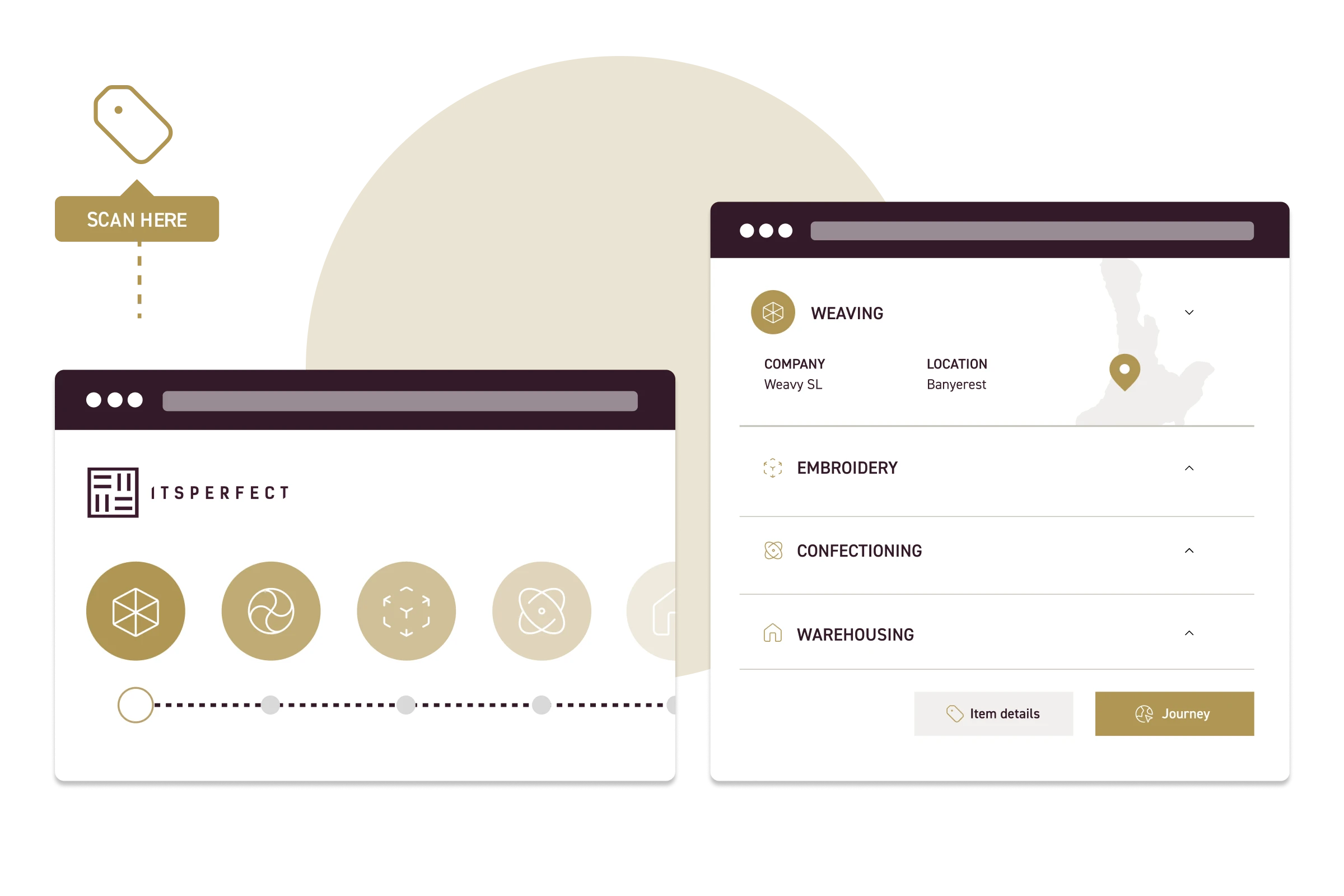
What is a Digital Product Passport (DPP)?
A Digital Product Passport is a digital record that accompanies a product throughout its lifecycle. It stores and makes key information related to sustainability, circularity, and regulatory compliance accessible.
According to EU guidance, a DPP can include data such as:
- Material composition and origin
- Environmental and lifecycle impacts
- Repair and recycling information
- Compliance and traceability identifiers
For consumers, the DPP increases transparency and supports more informed purchasing decisions. For regulators and authorities, it enables monitoring and enforcement. For fashion brands, it introduces a new, standardized way to manage product data across increasingly complex supply chains.
Over time, the DPP is expected to become the baseline transparency standard for products sold in the EU.
Which fashion products will the DPP include?
The textile-specific rules will be defined in a forthcoming Delegated Act, expected between late 2026 and early 2027.
Based on current drafts and preparatory work, the scope is expected to include:
- T-shirts, shirts, tops
- Trousers, skirts, dresses
- Knitwear, sweaters, jackets
- Underwear, socks, hosiery
- Footwear and sneakers
- Accessories such as scarves, bags belts, gloves, and hats
And exclude:
- Smart textiles (wearable fabrics embedded with electronic components, like sensors)
- Personal protective equipment (PPE)
- Medical devices
- Raw textile materials such as fibers, yarns, and unfinished fabrics
This means most everyday apparel products sold to consumers in the EU will fall within scope once the DPP becomes mandatory.
How will consumers access the DPP?
For textiles, DPP information is expected to be accessed digitally, most commonly through:
- QR codes printed on care labels or hangtags
- NFC chips embedded in labels or products
Scanning the code will link consumers and other stakeholders to a secure digital profile hosted by a certified DPP service provider. From there, users can view information such as material composition, origin, and sustainability-related data.
What criteria will textiles need to fulfil under the Digital Product Passport?
While the final requirements will be confirmed in the textile Delegated Act, the ESPR framework makes clear that DPPs are intended to support:
- Traceability across supply chains
- Durability and reparability of products
- Recyclability and end-of-life guidance
- Environmental performance, including lifecycle impacts
In practice, this means brands will need reliable, structured product data that reflects how a garment is made, used, repaired, and eventually recycled.
An updated timeline: When will the DPP be mandatory for fashion brands?
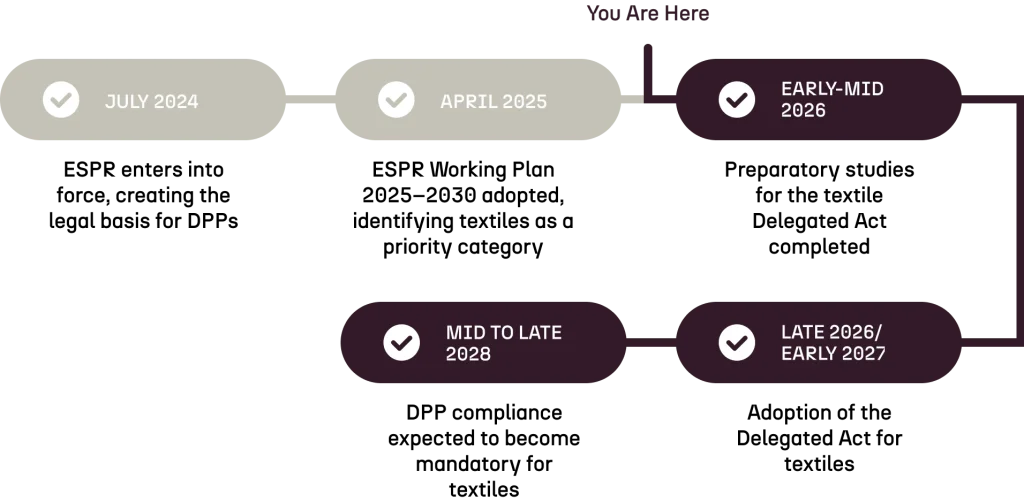
Based on current EU planning and officially published milestones, the timeline for fashion products is as follows:
- 18 July 2024 – ESPR enters into force, creating the legal basis for DPPs
- April 2025 – ESPR Working Plan 2025–2030 adopted, identifying textiles as a priority category
- Early-mid 2026 – Preparatory studies for the textile Delegated Act completed
- Late 2026 / early 2027 – Adoption of the Delegated Act for textiles
- Mid to late 2028 – DPP compliance expected to become mandatory for textiles, following a minimum 18-month transition period
In regulatory terms, the obligation applies to products “placed on the market” after the enforcement date. This includes both EU-produced goods and imports sold or distributed in the EU for the first time.
What data fields will fashion brands need to provide under the ESPR regulation?
The final list of mandatory data fields will be confirmed in the textile Delegated Act. However, brands can already anticipate the core categories based on ESPR guidance and current drafts:
- Material composition, including fiber types and recycled content
- Substances of concern, such as regulated chemicals
- Environmental impact indicators, for example carbon footprint or water use
- Traceability identifiers, at product, batch, or item level
- Production details, including manufacturing location and date
- Repair and maintenance information, where applicable
- Recyclability and end-of-life instructions
- Digital access method, typically via QR code or NFC
Preparing these data points in advance will make future compliance significantly smoother.
What fashion brands should do to prepare for the DPP
The Digital Product Passport should be approached as a business transformation, not just a compliance exercise. Brands that wait until 2027 risk rushed, expensive implementations.
1. Assign DPP ownership
Appoint a clear internal owner or cross-functional team spanning sustainability, product, IT, and compliance. Defined responsibility is essential for coordinating data, systems, and suppliers.
2. Map your current product and material data
Audit what product, material, and supplier data you already collect. Identify gaps, inconsistencies, and quality issues across systems such as PLM, ERP, and supplier platforms.
3. Engage key suppliers on traceability
Early engagement with suppliers is critical. Brands will rely on upstream partners for accurate material, origin, and certification data. Align expectations well before DPPs become mandatory.
4. Build the right infrastructure
Ensure your core systems can support structured, item-level product data and integrate with DPP service providers. Platforms like Itsperfect’s integrated DPP functionality are designed to connect product data directly to future DPP requirements.
5. Pilot, test, and train ahead of 2028
Use the remaining time to run pilots on selected product ranges. Testing data flows and internal processes now allows teams across product, sourcing, and sustainability to build confidence before DPPs become mandatory.
Why acting early matters
Preparing early for the Digital Product Passport delivers clear advantages.
It helps you:
- avoid last-minute scrambling and high implementation costs
- strengthen consumer trust through credible transparency
- reduce greenwashing risk by backing claims with verifiable data
- gain a competitive edge as DPPs become the industry standard
The fashion and textile sector is under increasing scrutiny, and DPPs will raise the bar for accountability across the entire product lifecycle.
How Itsperfect supports your Digital Product Passport journey
As we’ve now established, preparing for the DPP requires structured product data, supplier alignment, and systems that can evolve alongside regulatory updates.
Itsperfect’s Digital Product Passport is embedded directly within our fashion ERP software, connecting product development, sourcing, traceability, and sustainability data in one environment. DPP information can be generated directly from existing product records, reducing manual processes and improving consistency across teams.
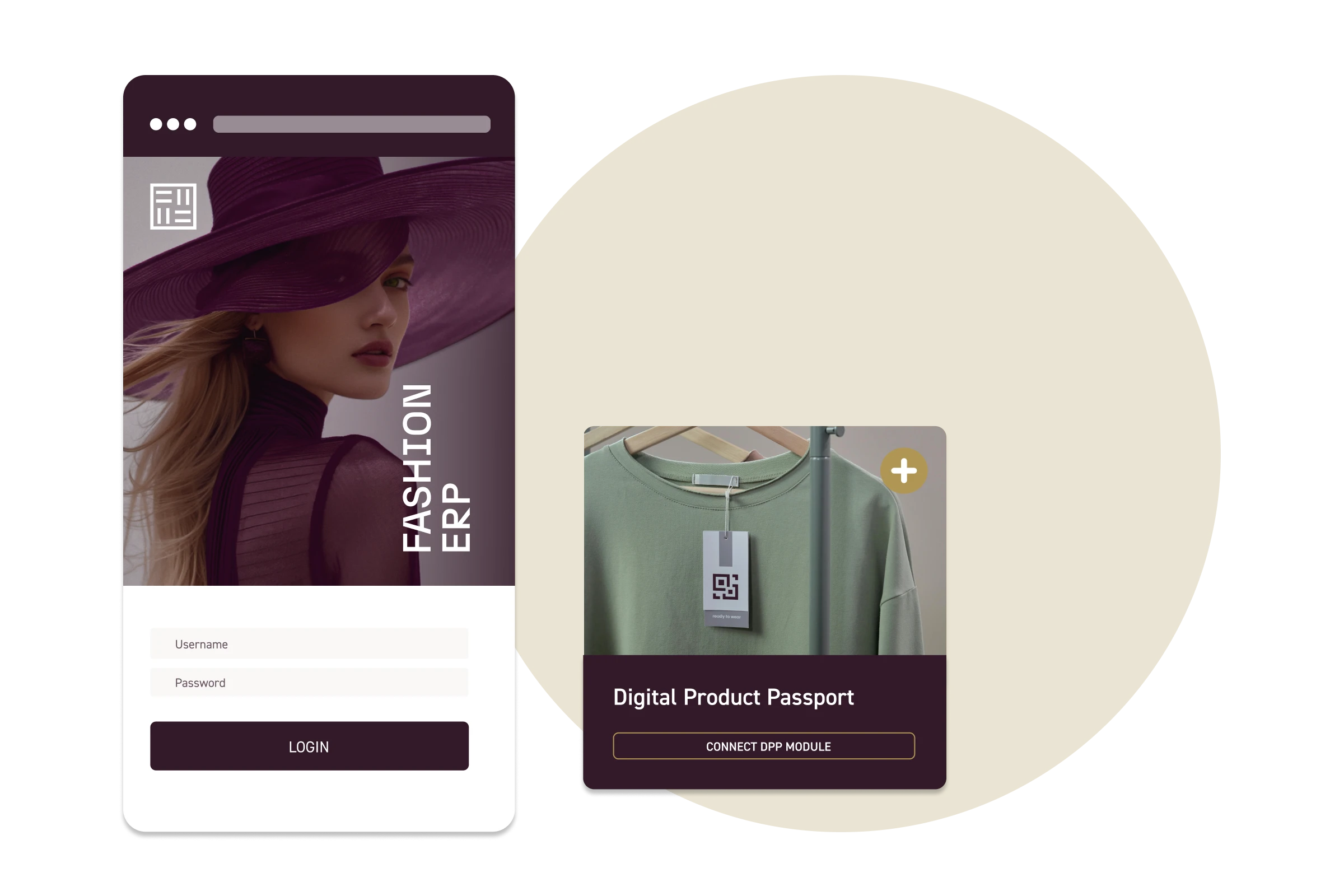
Brands using Itsperfect can:
- Generate unique QR codes from the ERP for labels or hangtags
- Connect material composition, origin, and certification data through integrated product data management
- Enable suppliers to upload required traceability information via the Vendor Portal
- Manage certifications such as GOTS, GRS, OCS, RCS, FairWear Foundation, SMETA, and BCI
- Present transparency through a custom-branded, mobile-friendly interface
- Scale functionality through modular tools including PDM, Traceability, and Sustainability
Because the DPP sits within the same system as product and sourcing data, information flows naturally from design to production to consumer access. Compliance becomes part of day-to-day operations rather than a standalone initiative.
FAQ: DPP & ESPR regulations
When will the Digital Product Passport become mandatory for fashion brands?
Digital Product Passports for fashion products are expected to become mandatory around 2028, following the adoption of the relevant Delegated Act and a minimum 18-month transition period. The exact technical requirements will be finalized between 2026 and 2027.
What is a Digital Product Passport (DPP)?
A Digital Product Passport is a digital record that stores key information about a product’s sustainability, circularity, and compliance. It can include details such as material composition, environmental impact, repair information, and traceability data.
Which fashion products will need a DPP?
Most everyday apparel and textile accessories sold in the EU are expected to fall within scope. This includes garments such as tops, dresses, trousers, knitwear, and accessories like scarves and gloves, while categories such as PPE and raw textile materials are expected to be excluded.
How will customers access a Digital Product Passport?
DPP information will typically be accessed through a QR code or NFC chip attached to the product or label. Scanning the code links to a secure digital profile containing sustainability and compliance data.
What should fashion brands do now to prepare for the DPP?
Brands should begin by mapping existing product data, engaging suppliers on traceability, and reviewing their digital infrastructure. Early preparation reduces implementation risk and helps ensure smoother compliance once DPP requirements take effect.
The takeaway: Get ahead with Itsperfect
The Digital Product Passport is coming, and for fashion brands selling in the EU, preparation is no longer optional. While many details will be finalized over the next two years, the direction is clear.
Brands that get a head start will be best positioned for 2028 compliance.
With integrated DPP capabilities built for fashion workflows, Itsperfect helps brands prepare for the ESPR era with confidence.
PREPARE FOR THE UPCOMING ESPR REGULATION WITH CONFIDENCE
Explore our Digital Product Passport module today!
